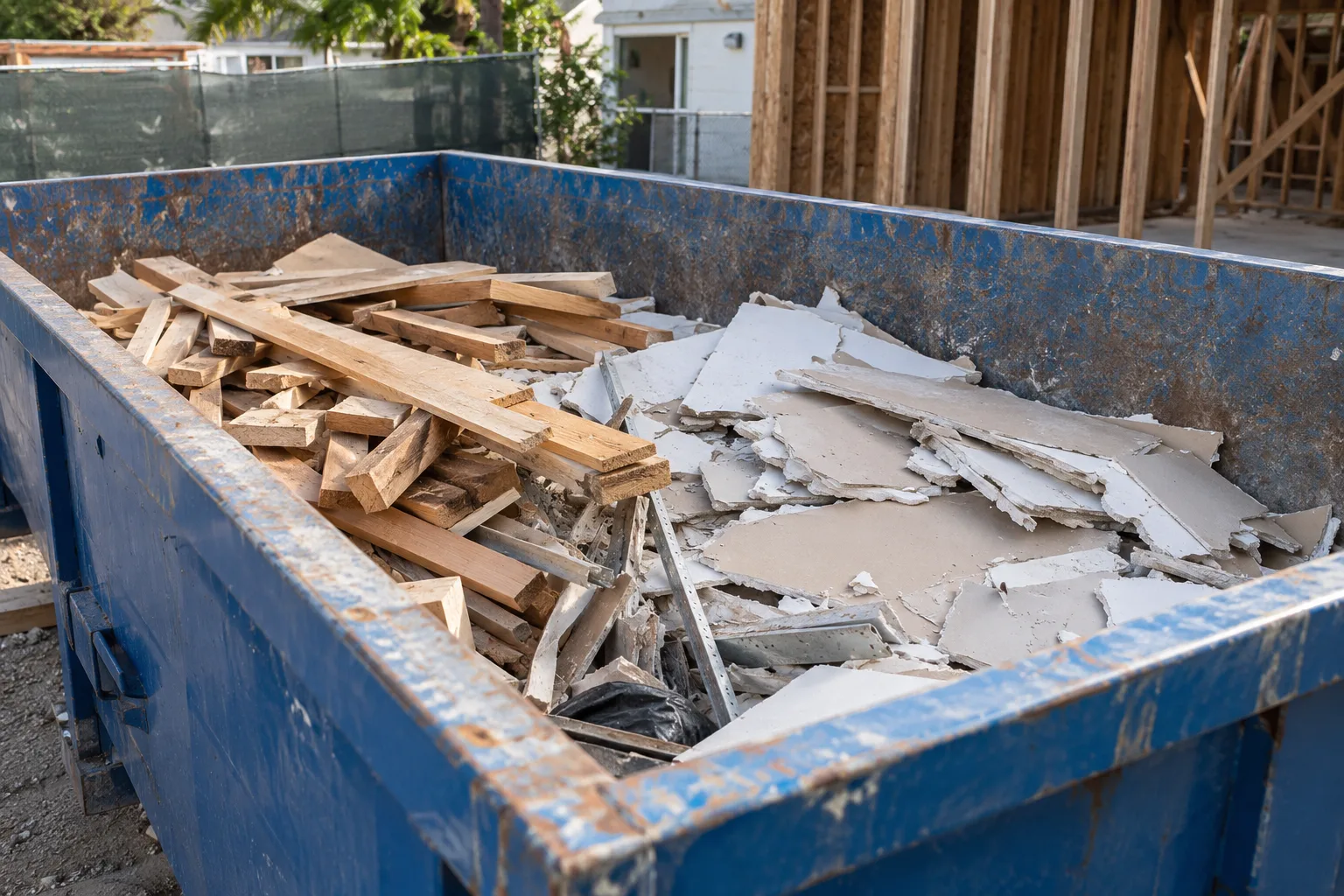
Debris planning for remodeling, repair, and light construction work. The most useful preparation happens before anything is tossed: identify the material, protect the access route, and confirm the load rules for the job address.
Separate the waste streams before demolition starts
Create distinct areas for ordinary construction debris, clean heavy material, metal, reusable material, and regulated waste. Once these materials are mixed in a container, sorting is harder and the load may no longer qualify for the intended facility or rate.
Know what requires a different path
Fluorescent lamps, mercury devices, batteries, paints, solvents, and suspected asbestos do not belong in an ordinary construction load. California guidance treats several of these as universal or hazardous waste. Stop work and use an appropriate specialist when the material is unknown or potentially regulated.
Plan for Los Angeles C&D rules
The City of Los Angeles requires mixed construction and demolition waste to go to a city-certified processor, and haulers handling that waste must hold the applicable private waste-hauler permit. Confirm the hauler and facility path for the actual job address before the container is delivered. Other cities have their own rules.
Jobsite sorting checklist
Label the material zones, brief the crew, keep heavy debris separate, protect the container approach, and assign one person to watch the fill line. Photograph unknown material before it is moved and ask for guidance. Keep loose debris from spreading into sidewalks, alleys, or neighboring property.
Discuss your project
For a useful estimate conversation, have the material, address, access notes, and timing ready.
Review the related serviceCall (202) 555-0154